


Players who compare the same title across different casinos often spot something odd. A slot they know well shows a Return to Player of 96.2% on one site and 94.1% on another, yet the artwork, bonus features, and soundtrack look identical. This is not a glitch and not a mistake in the paytable. Several popular games ship with multiple RTP configurations, and operators choose which version to host.
The Mechanics Behind Configurable RTP
Most modern slot providers, including NetEnt, Play'n GO, Pragmatic Play, and Thunderkick, build their games with a mathematical model that supports two to five RTP settings. The underlying reels, symbols, and bonus triggers stay the same. What changes is the frequency of certain wins or the hit rate of specific features. The result is a different long-term payout percentage attached to the exact same visual product.
Providers do this because operators across different markets have different commercial needs. A casino competing hard on game value may pick the top-tier version, while an operator with higher acquisition costs may run a lower one. During a routine look at operator differences on sources like cazinourix.com, you can see how the same slot title ends up with slightly different performance figures depending on who is hosting it.
Common RTP Tiers You Will Encounter
While exact figures vary by title, the typical bands for a configurable slot look something like this:
- High tier: 96% and above, often the version advertised in the provider's marketing material.
- Mid tier: Around 94% to 95.5%, a common middle ground.
- Low tier: 91% to 94%, often found on operators with aggressive bonus programs that need to offset promotional costs.
- Very low tier: Below 90%, rare but present in certain markets.
The difference between the top and bottom version of a well-known slot can exceed five percentage points, which has a real impact on long-run results.
How to Check Which Version You Are Playing
The RTP for any specific instance of a slot should be listed in the game's info panel, usually accessible through the paytable or settings menu. If a casino hides this information or lists only a range, that is a signal worth noting. Reputable operators licensed by regulators such as the MGA, UKGC, or ONJN are generally required to disclose the actual figure in use.
Quick Checklist Before You Spin
- Open the paytable and look for a line labelled RTP or Theoretical Return.
- Compare it against the provider's official game sheet, which usually shows all available versions.
- If the number is noticeably lower than expected, consider whether the game selection elsewhere offers better value.
Why the Difference Matters Over Time
A single session will not reveal RTP differences, since volatility dominates short-term outcomes. Over thousands of spins, however, the gap becomes material. On a 94% version, a player wagers roughly twice as much in net losses per hour compared with the 96.5% version of the same slot, assuming similar bet sizes and spin speed. For regular players, picking operators that run the higher versions is one of the simplest ways to improve long-term value.
A Note on Responsible Play

RTP describes a theoretical return across a very large sample. It does not guarantee any individual outcome, and no version of a slot should be treated as a reliable income source. Set a budget, treat the spend as entertainment, and step away when the session stops being enjoyable. Awareness of RTP tiers is useful knowledge, but discipline remains the more valuable habit.
Latest builds
 Nuclear_Fused
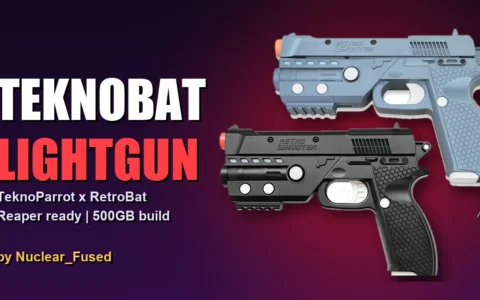
TeknoBat LightGun: Every TeknoParrot Light Gun Game in One RetroBat Build
TeknoBat LightGun from Nuclear_Fused is a 500GB RetroBat build with 79 TeknoParrot light gun games, preconfigured for RetroShooter…

Golden Tee Archive: The Complete Collection for GTee Clubhouse
The Golden Tee Archive comes in two parts, 2020 and earlier and 2021 and later, ready for GTee…

Guns & Glory: Silverbullet’s 258-Game Run-and-Gun RetroBat Build
Guns & Glory from Silverbullet is a 447GB RetroBat build with 258 run-and-gun and shooter games across 15…
 On Our Radar
Fate of the Galaxy: The Free Star Wars Starfighter Game Fans Have Waited For
Fate of the Galaxy is a free fan-made starfighter sim set in the Original Trilogy era, out now…
 On Our Radar
GTee Clubhouse: A Free Golden Tee Launcher for Your Whole GT Collection
GTee Clubhouse puts every Golden Tee from 1989 to GT LIVE Titan in one Windows launcher, with no…

VE/TO: Robert Hurst’s Raspberry Pi 4 and 5 RetroArch Image Returns With 13,000 Titles
VE/TO (Vintage Electronics / Timeless Odyssey) is the new version of Robert Hurst's plug and play RetroArch image…
Discussion