


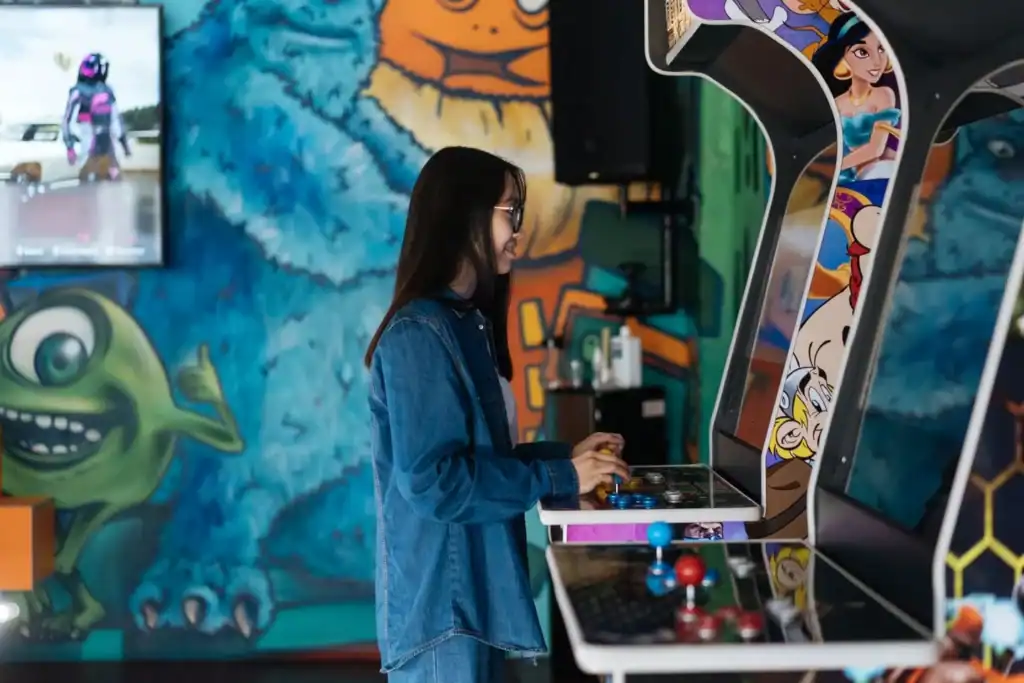
Keeping your initials on the leaderboard of an arcade game was once the height of fame. However, keeping the games actually playable is the real challenge. This article sets out to trace the history and find out why.
You’ve probably all known someone who managed to get a rude 3-letter word on the Galaga leaderboard and somehow kept it there for months. They were a legend. They got their initials on the leaderboard at the chippy next to the buzzing cabinet and roaring fryer. Then cartridges were introduced. Then download buttons. If you flash Pi images on a Sunday afternoon for fun, the stuff slipping away in that evolution is the exact stuff ending up on your SD card.
Back When You Had to Physically Show Up
Arcade machines were heavy and bulky. To get the highest score you would have to cycle to the bowling alley after school with a handful of coins in your pocket and hope that the lad from two streets away hadn’t gotten there before you.
Cartridges changed everything. You had a big block of plastic that you could lend to a friend or hide in your drawer for a decade. If you take it out now it will probably start.
MAME kept the score chase going after the cabinets got hauled off to storage units. Digital Arcade’s MAME high score challenge is into its fourth season, so the midnight leaderboard scraps are very much still happening.
Your Download Library Might Vanish One Day
You press play to enjoy something you purchased years ago, only to receive a server error.
With stores closed, licences expired, and games that require an online login to go offline the second a publisher shuts down their servers, it can be a bit of a pain, especially for libraries that can’t loan out items they aren’t legally allowed to keep.
UNC Greensboro’s Digital Games in Libraries project hosted a free online digital games forum on October 29 and 30, 2026, pulling librarians into two days of talks about exactly this mess. Kendra Albert took on the legal side. Andrew Borman covered how The Strong collects digital games.
Meanwhile in Kiwi Pubs
New Zealand’s version of the arcade cabinet pays out. Pokies hogged pub corners for decades before following everybody else onto phones.
Policing that move falls to the Department of Internal Affairs. Parliament passed the Online Casino Gambling Bill in April 2026, capping online licences at 15. Unlicensed offshore sites lose the right to operate or market to Kiwis from December 1, 2026. With the licensed list still settling, Casino Guru gives players in Aotearoa a place to compare casino reviews and swap notes in its community forum, with responsible gambling treated as part of the conversation.
The funniest thing about the new regime is that game designs will have to be made to stop players getting carried away and playing too long. All autoplay functions will no longer be allowed. So old cabinets in attract mode would fail as they’d happily autoplay until 2am.
Try Buying an Old Atari Game Legally
Go on, give it a shot on an old Atari console.
A 2023 reissue market survey from the Video Game History Foundation looked at 1,500 games and found 13% of classic U.S. releases still commercially available. Pre-1985 stuff came in under 3%.
Odds are decent the cartridge rattling around your drawer is one of the last legit ways to play the thing. Collectors are running tiny archives without meaning to.
Where the Old Cabinets Ended Up
The Strong National Museum of Play in Rochester has the International Center for the History of Electronic Games. They have an online exhibit called ‘Insert Coin to Start’ which looks at video games from the 1970s. There is also an arcade called Infinity Arcade which displays playable machines.
Kiwis got something weirder and better. Arca Arcade “Round One” travelled from Auckland to Porirua’s Pātaka Art+Museum, then on to Dunedin’s Tūhura Otago Museum in 2025, with playable cabinets wrapped in work by Aotearoa artists. Pātaka ran a top-score contest on Galaga and Pac-Man too. Designer Preston McNeil called the machines “a love letter to every kid who dropped their last 20cents into a game they knew they couldn’t win.” Spot on.
Your Shelf Is an Archive Too
No museum hands out badges for this stuff, but your collection counts, so here’s what tends to help.
- Dodgy capacitors get swapped before they leak. Keep a note of what still runs, too.
- ROM sets bundled with proper artwork make a library feel finished, like the Entex Adventure Vision collection for a weird little 1982 tabletop machine few people ever owned.
- Fan preservation projects survive on donations and volunteer hours, so a few bucks goes a long way.
- Pi builders should write down their emulator cores and settings before the SD card dies.
Chat to the old school guys at your local retro night. Half of gaming history is in people’s heads while they are arguing who had the highest score on the machine by the door. Write it down since the history is important.
Latest builds
 Software Download Info
MegaPPBox Released: Run Untouched Megatouch XL and MAXX Images on PC, Mac, Linux and Android
MegaPPBox is a stripped-down 86Box that runs untouched Merit Megatouch XL and MAXX images, from XL to MAXX…

20TB RetroBat Cloud Build – 129+ Systems & 54,439+ Games!
20TB RetroBat cloud build with 54,439+ games across 129+ systems, using Usenet Share to access the huge library…

Big Ds Pinball – The best Pinball Build to date on Arcade Punks!
Download Big D's Pinball Build, the biggest pinball release on Arcade Punks. PinUP Popper, Visual Pinball and Future…

12TB Kinhank HyperSpin Attraction Build: The Complete Re-Release (Base + All 17 Add-On Packs)
The full 12TB Kinhank Attract Mode build re-uploaded in one place: base drive plus all 17 add-ons, including…

ARTAX TTX3 MEGA MULTI – Taito Type X3 Multi – [JVS] [FASTIO] [1080p] [v4.1] – Re-Up
Artax TTX3 Mega Multi v4.1 is back with fresh Usenet and Rapidgator links. 550+ games for original Taito…

The Missing Pack! Kinhank Part 13 PS2 Collection Lands at 1.23TB
Kinhank Part 13 finally arrives with a huge 1.23TB PlayStation 2 collection packed with classics, forgotten titles and…
Discussion