


Gaming coverage can become dominated by launch dates, reviews, trailers and announcements, yet the wider conversation has become considerably more interesting. Retro hardware and emulation continue generating genuine stories because older games remain connected to preservation, accessibility, hardware design and the practical question of how you can play decades-old software today.
In 2026, the Nintendo 64 is reaching its 30th anniversary, with renewed attention around original consoles, modern hardware recreations, FPGA systems and emulation. Nintendo sold 32.93 million Nintendo 64 systems worldwide, giving the anniversary considerable historical scale. If you enjoy looking beyond new releases, that legacy shows why gaming history remains an active part of today’s conversation.
Gaming news now covers a wider ecosystem
Gaming news increasingly covers the wider ecosystem surrounding games, so retro developments fit naturally into that broader discussion. Hardware announcements, firmware updates, preservation discoveries, emulator improvements and community projects can all become substantial stories when they change how you experience older software.
Analogue’s 3D provides a strong current example, as its FPGA-based Nintendo 64 system has received a steady stream of firmware updates throughout 2026. Version 1.5.0, released in July, added internal graphical upscaling, further core improvements and faster memory loading. If you follow gaming news closely, developments like these show how an older library can keep generating new technical stories without requiring a new game.
Modern hardware gives old games fresh relevance
Retro hardware also demonstrates that revisiting older games does not have to mean simply connecting an original console to an old television. Modern systems can preserve familiar controls, cartridge compatibility, display characteristics and other details, so you can approach classic libraries through hardware designed for current setups.
The Evercade Nexus is scheduled for release on October 30, 2026, at $199.99 in the United States, with a physical cartridge system built around 32-bit and 64-bit games. Its launch lineup includes Banjo-Kazooie and Banjo-Tooie, so you can see how a new piece of hardware can turn a familiar library into a current product story with genuine technical and preservation interest.
Source code can uncover forgotten gaming history
The Evercade Nexus story also highlights why retro coverage can extend beyond hardware specifications. The Banjo-Kazooie Double Pack uses original Rare source code, which reportedly revealed previously unknown material during development, including unused music, a level editor and additional unlockable content.
That discovery gives players another reason to pay attention, since older games can contain material that was never visible in their original releases. For you as a fan, this kind of development can make a familiar game feel newly documented without pretending that its original history has changed. It also demonstrates how access to development material can contribute to a richer understanding of games that have already been around for decades.
Emulation keeps older libraries accessible
Emulation remains another important part of the discussion because it gives older software a practical route onto modern computers and handheld devices. Projects covering systems from the NES through later generations continue receiving development, so the subject involves technical progress as well as nostalgia.
You can also choose between different approaches depending on what matters most to you, including convenience, accuracy, controller compatibility, resolution or portability. That flexibility becomes useful when original hardware is expensive, difficult to maintain or awkward to connect to a modern display. Consequently, emulation remains relevant because it addresses a practical problem for players who want access to older libraries without rebuilding an entire vintage setup.
FPGA development adds another technical layer
FPGA systems add a different dimension because they recreate hardware behavior through programmable logic, so discussions can become highly technical when accuracy and responsiveness matter to you. MiSTer FPGA remains an active community project with a large collection of console, computer and arcade cores, while developers continue refining individual systems and adding features.
In April 2026, RetroAchievements also introduced hardcore achievement support for NES games on MiSTer, with work continuing toward additional cores. That development connects hardware recreation with modern community features, so an older game can participate in contemporary gaming habits without losing the technical character that makes FPGA systems attractive to enthusiasts.
Retro gaming keeps producing current stories
The most interesting part of retro gaming in 2026 is that the subject keeps producing fresh stories without depending on another collection of old games. You can follow new hardware, firmware updates, source-code discoveries, emulator development, FPGA cores, achievement systems and preservation projects, so there are several ways for familiar games to remain relevant.
The Nintendo 64 anniversary provides another clear example, as three decades of history are now being discussed alongside new hardware and modern methods of playing its library. If you follow gaming beyond release calendars, retro technology gives you a broader view of the medium, where old software continues to raise new questions about access, accuracy, preservation and how you want to experience gaming history.
Latest builds
 Nuclear_Fused
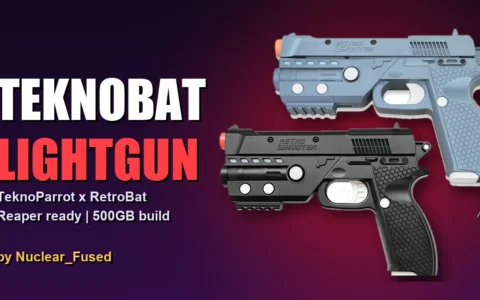
TeknoBat LightGun: Every TeknoParrot Light Gun Game in One RetroBat Build
TeknoBat LightGun from Nuclear_Fused is a 500GB RetroBat build with 79 TeknoParrot light gun games, preconfigured for RetroShooter…

Golden Tee Archive: The Complete Collection for GTee Clubhouse
The Golden Tee Archive comes in two parts, 2020 and earlier and 2021 and later, ready for GTee…

Guns & Glory: Silverbullet’s 258-Game Run-and-Gun RetroBat Build
Guns & Glory from Silverbullet is a 447GB RetroBat build with 258 run-and-gun and shooter games across 15…
 On Our Radar
Fate of the Galaxy: The Free Star Wars Starfighter Game Fans Have Waited For
Fate of the Galaxy is a free fan-made starfighter sim set in the Original Trilogy era, out now…
 On Our Radar
GTee Clubhouse: A Free Golden Tee Launcher for Your Whole GT Collection
GTee Clubhouse puts every Golden Tee from 1989 to GT LIVE Titan in one Windows launcher, with no…

VE/TO: Robert Hurst’s Raspberry Pi 4 and 5 RetroArch Image Returns With 13,000 Titles
VE/TO (Vintage Electronics / Timeless Odyssey) is the new version of Robert Hurst's plug and play RetroArch image…
Discussion